
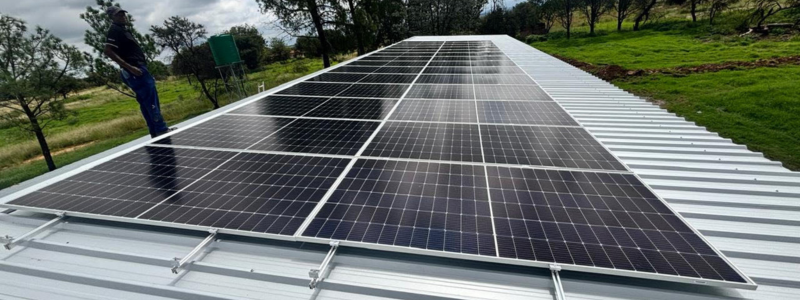
Investing in a solar power system in South Africa offers significant opportunities to reduce electricity expenses. With the country’s abundant sunlight and rising energy costs, solar energy presents both financial and environmental benefits.
Financial Savings with Solar Energy
South Africa has experienced substantial increases in electricity tariffs. For example, the average tariff escalated from 19.59 cents per kWh in the 2007/2008 financial year to approximately 166 cents per kWh in 2023/2024, marking a 747% rise . In contrast, the cost of solar equipment has decreased significantly, with prices dropping by 80% between 2010 and 2021 .
For households consuming around 900 kWh monthly, investing in a solar system can lead to substantial savings. Such a system could pay for itself in approximately seven to eight years through reduced electricity bills .
Operational Benefits for Businesses
Businesses can also reap the rewards of solar energy. Implementing solar power can lead to a 50-70% reduction in electricity bills . Moreover, integrating solar systems with battery storage ensures energy availability during load-shedding, minimizing operational disruptions. This shift not only offers financial savings but also bolsters a company’s commitment to sustainability, enhancing its brand image .
Long-Term Investment and Environmental Impact
Solar panels typically have a lifespan of 25 years or more, providing long-term savings and a stable return on investment. Beyond financial advantages, adopting solar energy contributes to environmental sustainability by reducing reliance on fossil fuels and lowering greenhouse gas emissions .
In South Africa, a solar system can significantly reduce electricity bills by generating your own power, with savings potentially ranging from R19,800 to R26,400 annually for a 5kW system, depending on factors like power consumption and electricity costs.
Here’s a more detailed breakdown:
- How Solar Systems Save Money:
- Solar panels convert sunlight into electricity, reducing your reliance on the grid.
- You use the sun’s energy to power your home, lowering your electricity consumption and bills.
- This also helps mitigate the impact of power outages.
- Factors Affecting Savings:
- Power Consumption: Your household’s electricity usage plays a crucial role in how much you can save.
- Solar Panel Size: A larger solar system will generate more electricity, leading to greater savings.
- Electricity Costs: Higher electricity rates mean larger potential savings from solar power.
- Location: Areas with more sunshine will see higher solar generation and savings.
- Example Savings:
- A 5kW solar system in Cape Town could save you 6,000-8,000 kWh annually, translating to R19,800 to R26,400 in savings.
- Additional Tips for Saving:
- Energy Efficiency: Replace old appliances with energy-efficient models.
- Reduce Consumption: Turn off lights and appliances when not in use.
- Consider Solar Water Heating: Utilize solar water heaters to reduce reliance on grid electricity for heating water.
Conclusion
Transitioning to solar energy in South Africa is a prudent decision, offering substantial financial savings, operational reliability, and environmental benefits. With decreasing costs of solar technology and increasing electricity tariffs, both homeowners and businesses have compelling reasons to consider solar power as a viable and advantageous energy solution.